
H100 rental price
median price per GPU-hour$2.56 / GPU-hr
Vendor specification data, Rank.ai analysis
Behind the number
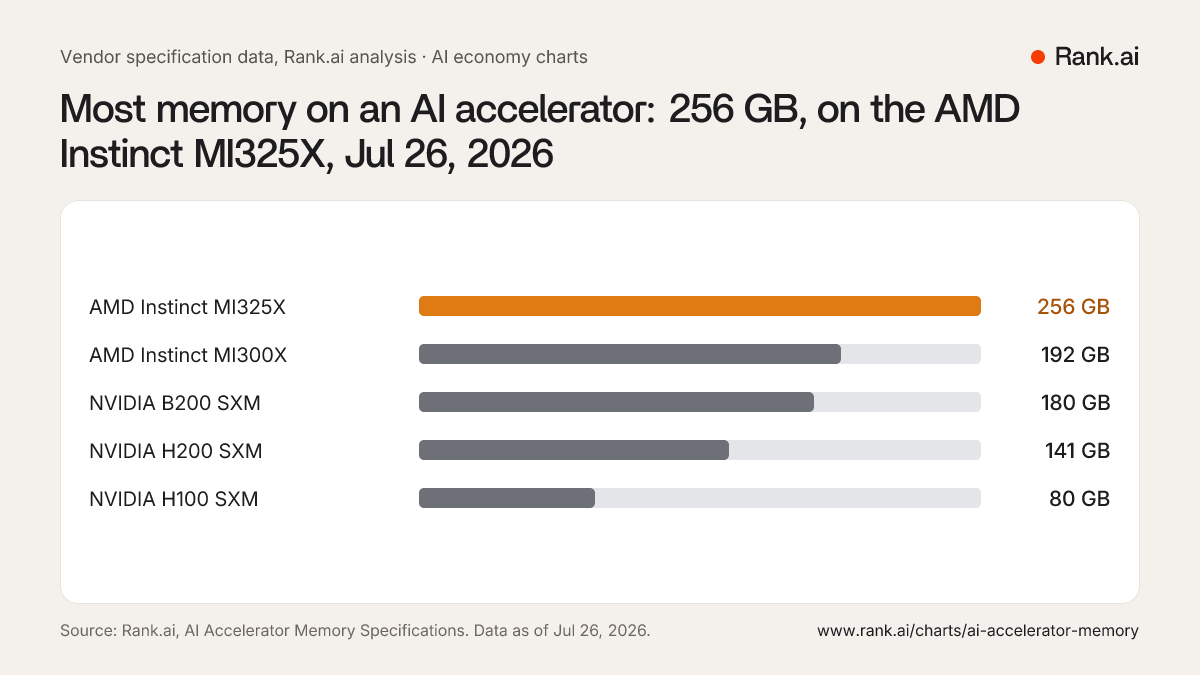
The board in rank order. The headline number is the top-ranked row, highlighted.
| Rank | Entry | on-package memory capacity |
|---|---|---|
| 1 | AMD Instinct MI325X | 256 GB |
| 2 | AMD Instinct MI300X | 192 GB |
| 3 | NVIDIA B200 SXM | 180 GB |
| 4 | NVIDIA H200 SXM | 141 GB |
| 5 | NVIDIA H100 SXM | 80 GB |
256 GB on every publication so far. A line appears here as soon as the number moves.
Model size is bounded by memory before it is bounded by anything else: a model must fit in accelerator memory, in one device or across many, before a single token can be generated. This chart tracks the ceiling, the largest on-package memory capacity on any datacenter AI accelerator in the reviewed cross-vendor specification matrix.
Capacities come from first-party vendor specifications, reviewed and republished per accelerator on the underlying board alongside memory bandwidth. Only shipping datacenter parts with published specifications are included; roadmap claims and unannounced configurations are not, so the ceiling moves when hardware ships, not when it is teased.
Every jump in the memory ceiling changes inference economics: a model that needed two accelerators can fit on one, which cuts what it costs to serve.
Charts
Enter your website. In about two minutes, Rank.ai asks ChatGPT, Claude and Gemini 12 questions your customers ask and grades how often they name you.