Compared
Rank.ai vs BrightLocal
BrightLocal runs the classic local stack: rankings, listings, citations and reviews. Rank.ai tracks Google and the AI assistants answering your buyers, then writes and publishes the pages that win those answers. This guide walks both products screen by screen, with prices from their live pricing page and ours.
01
The short answer
A team running on BrightLocal has rank tracking on Google and Bing, listings sync, citation building and review campaigns. What it still lacks is any record of what ChatGPT, Claude or Gemini answer when a buyer asks who to hire, and every page on the website still gets written by hand. Rank.ai ships both halves: daily AI answer tracking across seven engines, and an article pipeline that publishes the missing pages into your CMS with your approval.
Choose Rank.ai when
- You want a daily record of what ChatGPT, Claude and Gemini answer about your market
- Content production belongs in the same program as rank tracking
- You track many locations and want a flat subscription
- You want to check the vendor's measurement in public before paying
Choose BrightLocal when
- You need a vendor's team submitting citations to directories this quarter
- Review response campaigns over email, SMS and in-store are core to your offer
- You put white-labeled client reports in front of clients this month
- You want a done-for-you managed SEO service
02
What each platform does
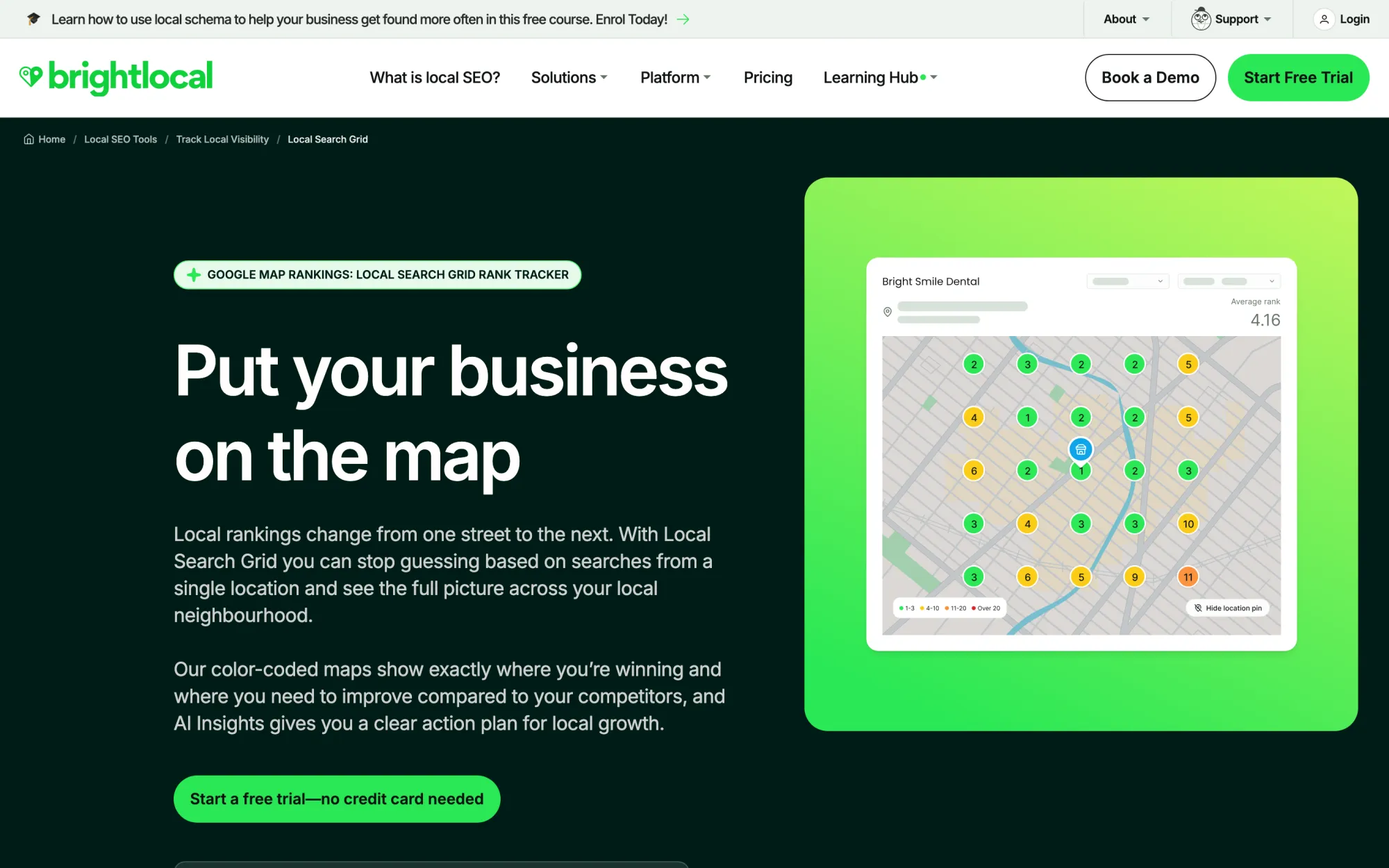
BrightLocal is a local SEO suite built around Google’s map results. Its Local Search Grid scores your map-pack position across a grid of points up to 15x15, its Citation Tracker audits your name, address and phone across the web, and its Reputation Manager watches reviews on 80+ sites. The whole product answers one question: how healthy is this business on Google’s local surfaces?
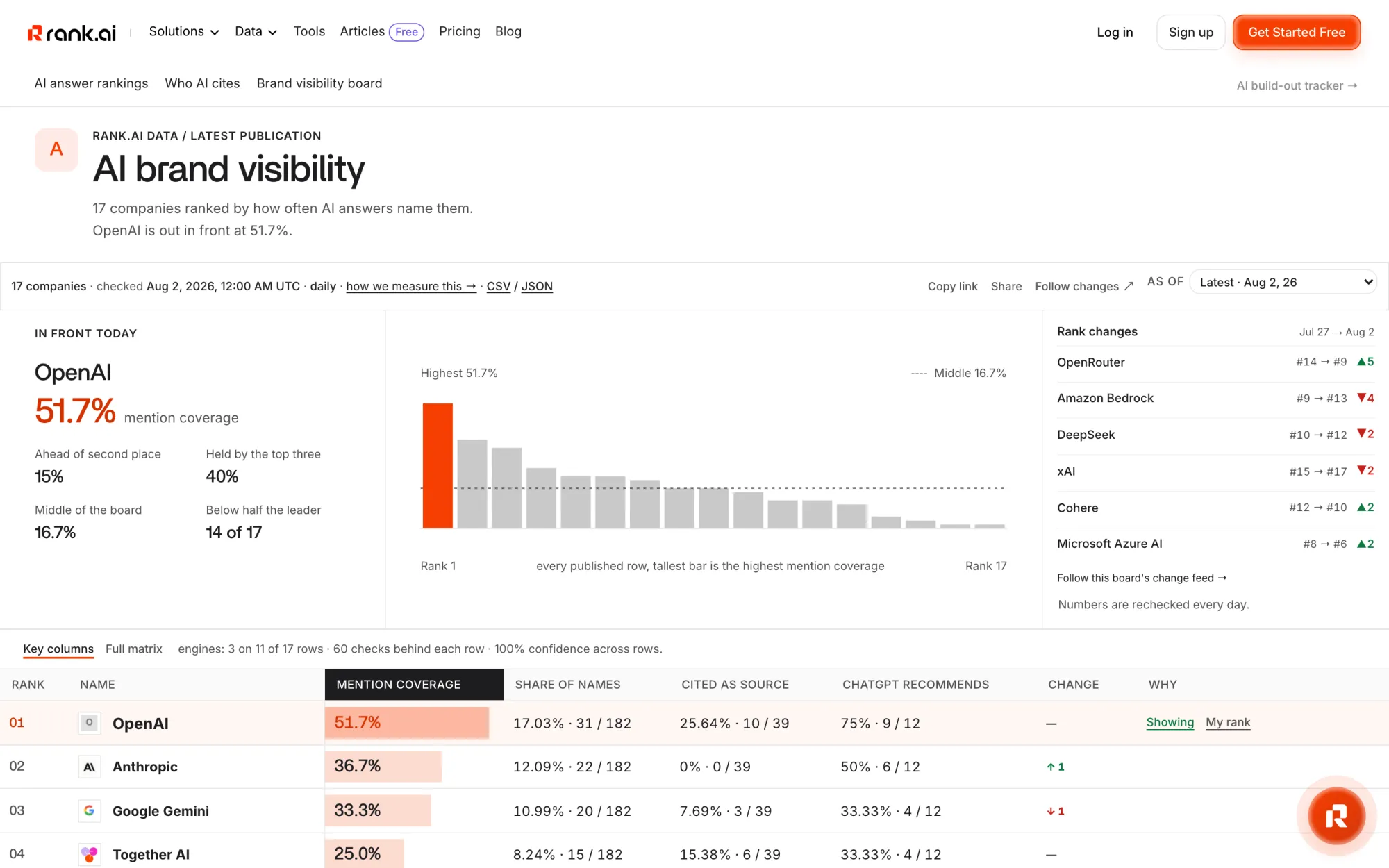
Rank.ai starts from a different question: what do the engines your buyers consult actually say, and which pages would change the answer? It runs the same geo-grid scan on Google Maps, and it also puts your market’s buying questions to ChatGPT, Claude and Gemini every day, records each answer, and feeds the gaps straight into an article pipeline that publishes to your CMS. The measurement runs in public: the AI brand visibility board ranks 17 companies by how often AI answers name them, open to anyone, rechecked daily.
03
Daily recorded answers from ChatGPT, Claude and Gemini
BrightLocal’s rank tracking covers Google Search, Google Maps and Bing, and its AI Insights feature is a recommendations layer over that same local data. None of its surfaces record what an AI assistant answers. Rank.ai puts your market’s real buying questions to ChatGPT, Claude and Gemini every day, samples each engine three times to smooth random variation, and stores which brands each answer names. Perplexity, Grok, Google AI Overviews and DeepSeek run on the same surface. When a client asks why they lost a job to a competitor ChatGPT recommended, you open the recorded answer from that week.
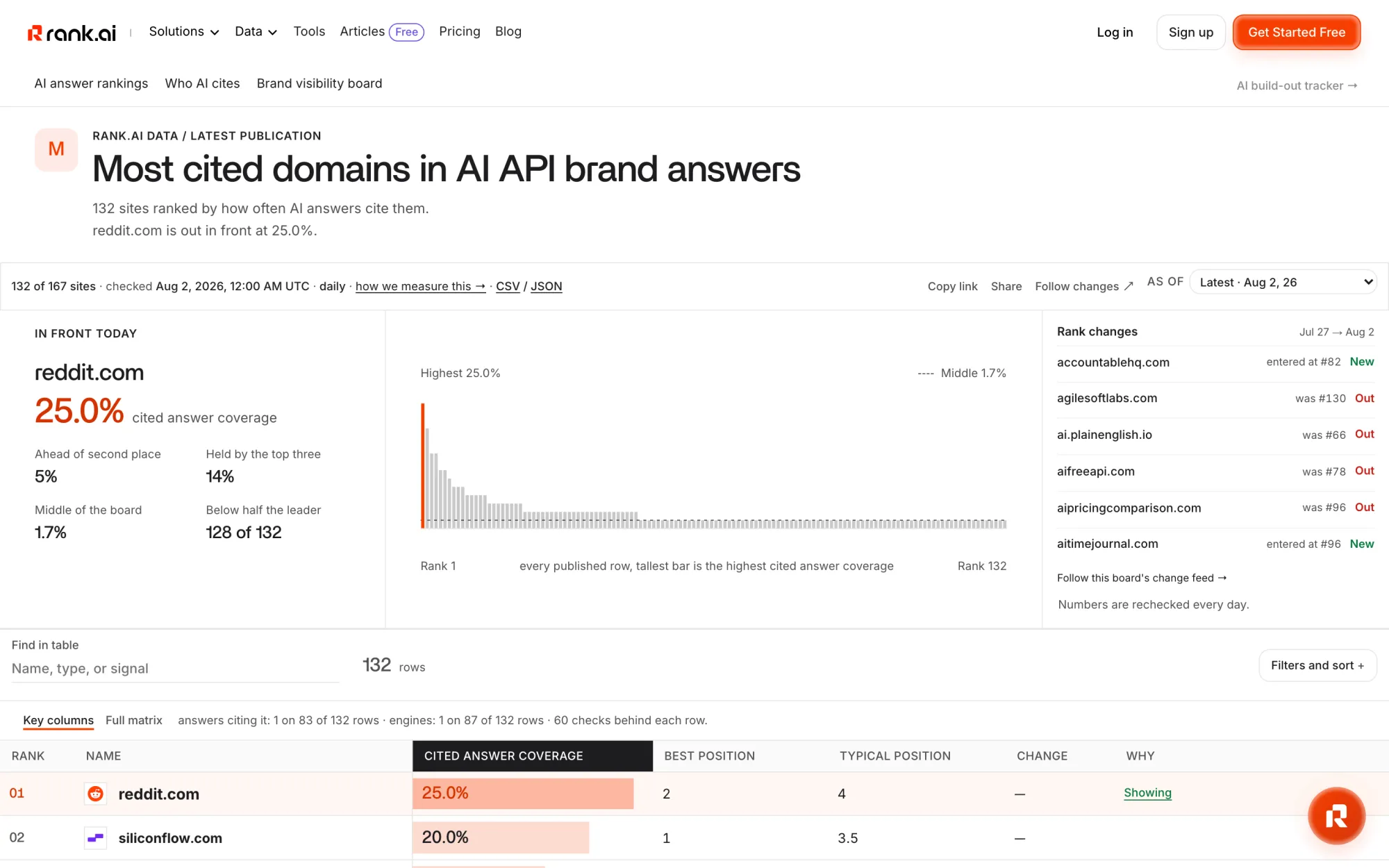
Each recorded answer keeps the URLs the engine cited while writing it. That list shows which pages the answers are built from, which competitors own those pages, and which questions cite nobody at all, the openings where a new article can win the citation. The source list feeds the article brief directly, so the tracker and the writer run on the same data.
04
Articles researched, written and published to your CMS
BrightLocal’s content features stop at scheduling Google Business Profile posts and publishing customer reviews to your site. Rank.ai’s article pipeline takes a brief, researches the topic against live search results and the pages already ranking, writes long-form through an editorial review loop, generates the images, and publishes into Webflow, WordPress, Shopify or WordPress.com. Nothing goes live without your approval. Ten published articles a month are included on the $0 plan, so the content program that feeds your rankings runs inside the same login as the tracking that measures them.
The loop closes on its own data. The tracker finds a buying question where the recorded answers cite nobody, the brief targets that question, the article publishes, and the daily recheck shows whether the new page starts getting cited. That is the working motion BrightLocal has no equivalent for.
05
The local stack, side by side
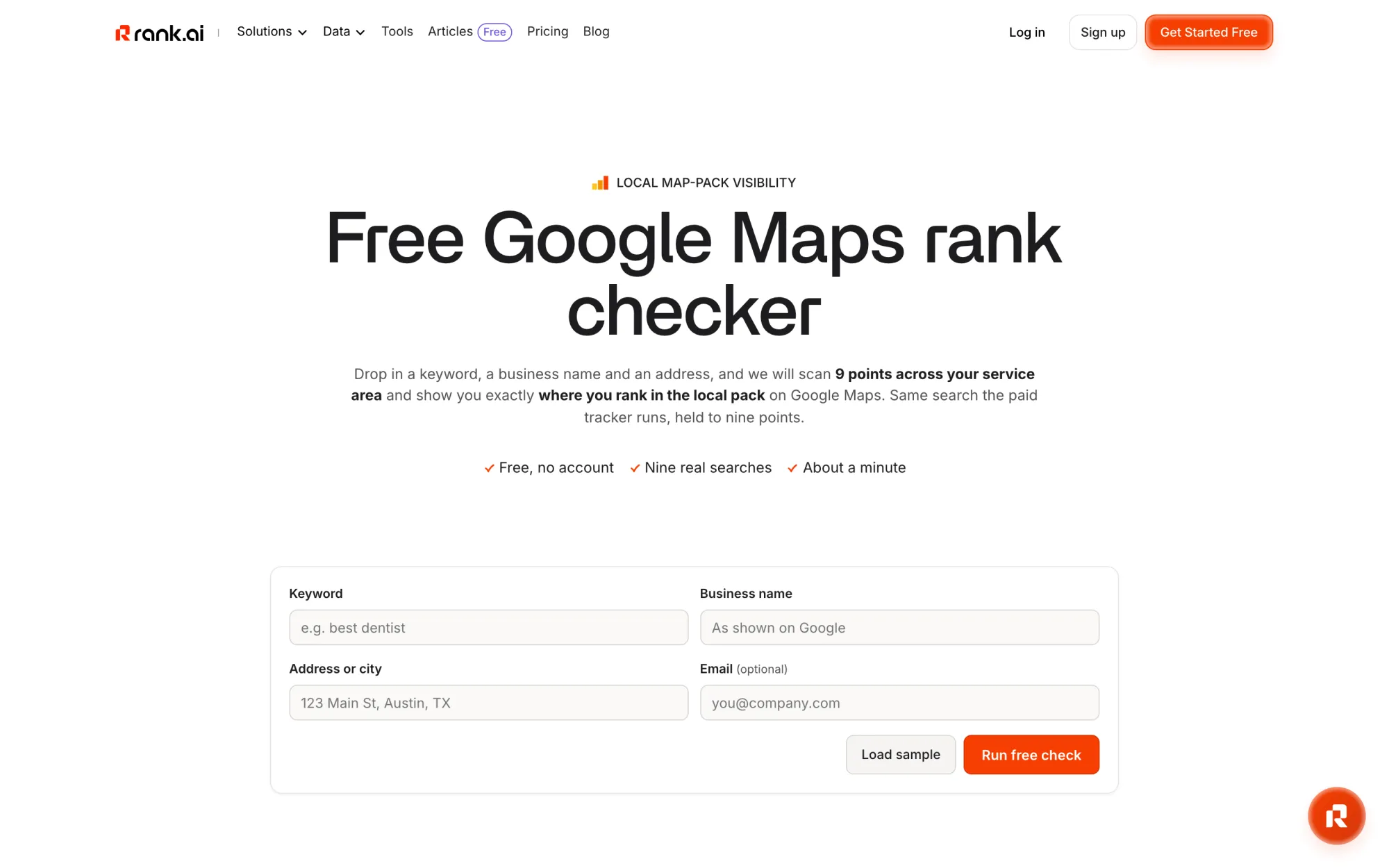
On the classic local surfaces the two products overlap more. Rank.ai runs geo-grid scans on Google Maps, a weekly sweep that cross-checks your name, address and phone against eight directories, a daily snapshot of every linked Google Business Profile that flags unauthorized changes, a GBP audit that grades every ranking signal on the profile, and review analysis with sentiment, topics and pain-point detection on each new review. All of that runs on every plan, including the free one. You can run the grid scan on any business right now without an account.
BrightLocal’s depth on this stack is real, and three pieces of it have no Rank.ai equivalent. Citation Builder is a managed service: their team submits your listings to directories from $2 per citation, and the citations are owned outright with no recurring fees. The Grow tier monitors reviews across 80+ sites, posts responses from the dashboard, and runs review-request campaigns over email, SMS and in-store. White-label reporting is in the platform comparison chart, and a managed SEO service starts at $1,299 a month. If those services are the spine of what you sell this quarter, BrightLocal earns that work.
06
Pricing in practice
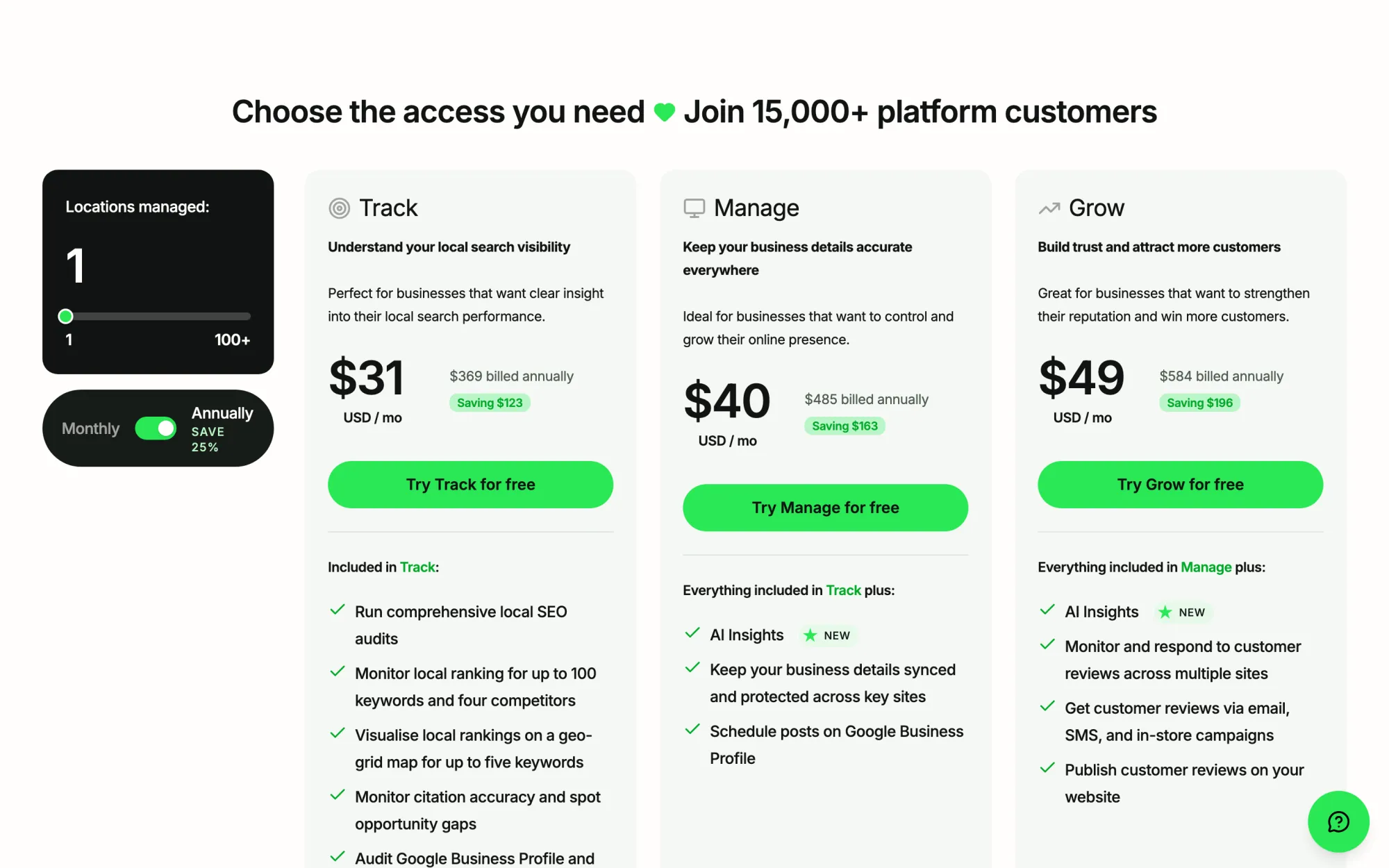
BrightLocal prices per location. With the locations slider at one and annual billing, the cards read Track $31 a month, Manage $40 and Grow $49, billed at $369, $485 and $584 a year. The $31 Track tier caps the geo-grid map at five keywords, and AI Insights starts on the $40 Manage tier. The price climbs with the slider, which runs to 100 locations and beyond; BrightLocal’s own platform page works Grow out to $7.48 per location per month at 50 locations on annual billing, about $374 a month. Citation Builder and the managed service bill on top.
Rank.ai’s plans are flat: $0, $50 and $250 a month, with one credit pool spent across geo-grid points, Google rank checks, AI answer runs and extra articles at half a cent per credit. Ten locations cost the same subscription as one, and top-up credits you buy never expire. On the $50 Starter plan, 5,000 credits and 30 published articles cover a daily 5x5 grid on three keywords (2,250 credits) plus one buying question sampled three times a day on ChatGPT, Claude and Gemini (2,160 credits), with the remainder for audits and rank checks. Adding a location changes what you spend credits on, with no new line on the invoice.
07
The full ledger
Every BrightLocal cell below is grounded in one of the pages cited in this guide, rendered in a browser. Where Rank.ai is behind, the cell says so.
| Capability | Rank.ai | BrightLocal |
|---|---|---|
| Rank tracking | ||
| Google Search + Maps rank tracking | Yes | Yes |
| Geo-grid rank tracking | Yes | Yes |
| Apple Maps rank tracking | In roadmap | No |
| ChatGPT, Claude + Gemini answer tracking | Yes | No |
| Perplexity, Grok + DeepSeek tracking | Yes | No |
| Google AI Overviews tracking | Yes | No |
| Listings + reputation | ||
| Citation discovery + NAP audit | Yes | Yes |
| Managed citation submission | No | Yes |
| Review monitoring + response | Monitoring, no replies | Yes |
| Google Business Profile audit | Yes | Yes |
| White label client reports | In roadmap | Yes |
| Content + links | ||
| Article generation + CMS publishing | Yes | No |
| Peer-to-peer backlink exchange | Yes | No |
| Public daily boards of recorded AI answers | Yes | No |
| Platform | ||
| Free no-signup tools | Yes | Yes |
| MCP server | Yes | Yes |
| API access | Yes | Custom price |
Sources: brightlocal.com/pricing, /platform, /local-seo-tools/rankings/{local-rank-tracker, local-search-grid}, /local-seo-tools/auditing/citation-tracker, /citation-builder, /reputation-manager. Pricing and platform pages rendered in a browser August 2026.
08
Switching without losing your reporting
Migration is a re-setup: enter your locations and target keywords in Rank.ai and tracking starts the same day. We do not import BrightLocal’s historical rank data, so most teams run the two side by side for one billing cycle, keep client reports on the old history while the new record builds, and consolidate once the Rank.ai record covers a full month. Citations built through Citation Builder are owned outright, so nothing there needs migrating. The free geo-grid scan and the AI visibility check run without an account, which makes the side-by-side test free to start.
09
Frequently asked
Why would I choose Rank.ai over BrightLocal?
Does Rank.ai do everything BrightLocal does?
Can I use both?
Do you do citation building?
What about reviews and reputation management?
Do you have white label?
What is the pricing model vs BrightLocal's?
What about content writing? BrightLocal doesn't do that, right?
How can I verify Rank.ai's AI tracking before paying?
How do I migrate from BrightLocal to Rank.ai?
One login from tracking to published article
Start on the $0 plan, run a free geo-grid scan, and watch the article pipeline publish to your own CMS.