

Rank.ai

February 12, 2026
The Impact of AI-Driven Automation on Business Growth
Harnessing AI Automation to Propel Business Success and Innovation
Introduction: Revolutionizing Growth through AI-Driven Automation
Transforming Modern Business with AI-Driven Automation
Artificial Intelligence (AI) has become a cornerstone of modern business operations, powering automation that streamlines workflows and propels growth. By automating routine and repetitive tasks, AI frees workforce capacity, enabling teams to focus on strategic initiatives that deliver greater value.
Amplifying Growth and Productivity
AI-driven automation enhances operational efficiency across sectors by reducing human error, accelerating task completion, and optimizing resource allocation. This leads to significant cost reductions, faster decision-making through real-time data analysis, and improved customer experiences.
Automated systems integrated with AI empower businesses—from small enterprises to large corporations—to scale efficiently, meet fluctuating demand, and maintain competitive edges. The technology's capabilities stretch from predictive maintenance in manufacturing to personalized customer engagement in retail, underscoring its role as a critical driver for business productivity and sustainable growth.
Understanding the Four Pillars of Effective AI Automation
What are the four pillars of automation?
AI automation in business is anchored on four essential pillars: resilient, intuitive, secure, and end-to-end automation. Each pillar addresses critical operational demands, ensuring AI solutions are robust, user-friendly, compliant, and comprehensive.
Resilient automation and maintaining system stability
Resilient automation relies on leveraging metadata—particularly in platforms like Salesforce—to sustain test stability amid updates and environmental changes. This approach minimizes disruptions from new software releases or browser updates, guaranteeing continuous alignment and reliable performance in dynamic business landscapes.
Intuitive, low-code interfaces for ease of use
Intuitive automation empowers users through low-code environments. These interfaces simplify the creation and debugging of automated workflows, negating the need for deep programming skills. Such accessibility accelerates adoption across teams, democratizing automation and fueling productivity enhancements.
Security and compliance in AI-driven processes
Security underpins all AI automation practices. Rigorous adherence to security and data protection standards, complemented by encryption capabilities, safeguards sensitive information. This pillar ensures automation initiatives conform to complex regulatory requirements, fostering trust and operational integrity.
End-to-end automation covering diverse business systems
End-to-end automation spans beyond individual platforms, integrating UI and API testing across Salesforce and various external applications—including databases, email, and web services. This comprehensive coverage streamlines business processes, enhancing efficiency and supporting consistent quality assurance in complex IT ecosystems.
How AI and Automation Drive Exceptional Business Productivity
What is the impact of AI and automation on business productivity?
AI and automation play a pivotal role in boosting business productivity by Automating repetitive tasks with AI that traditionally demand significant human effort. This automation reduces human error and lowers operational costs, particularly in areas such as invoice processing, compliance checks, and HR management.
Integration of advanced technologies like Machine learning and robotic process automation (RPA) streamlines workflows across diverse business functions. Businesses can now route invoices faster, manage regulatory compliance more effectively, and automate candidate screening with greater accuracy and speed.
Furthermore, continuous learning systems powered by AI evolve with each interaction, improving efficiency over time. This adaptability not only enhances task execution but also supports smarter decision-making based on AI methodologies in decision-making.
Ultimately, AI-driven automation catalyzes digital transformation by enabling companies to innovate business models and tailor their services to consumer preferences. This transformation strengthens competitive advantage by improving customer satisfaction and operational agility.
By embracing AI and automation, organizations reduce costs, increase operational efficiency, and maintain a resilient edge in fast-paced markets.
Transforming Decision-Making and Driving Business Growth with AI
How does AI affect business growth and decision-making?
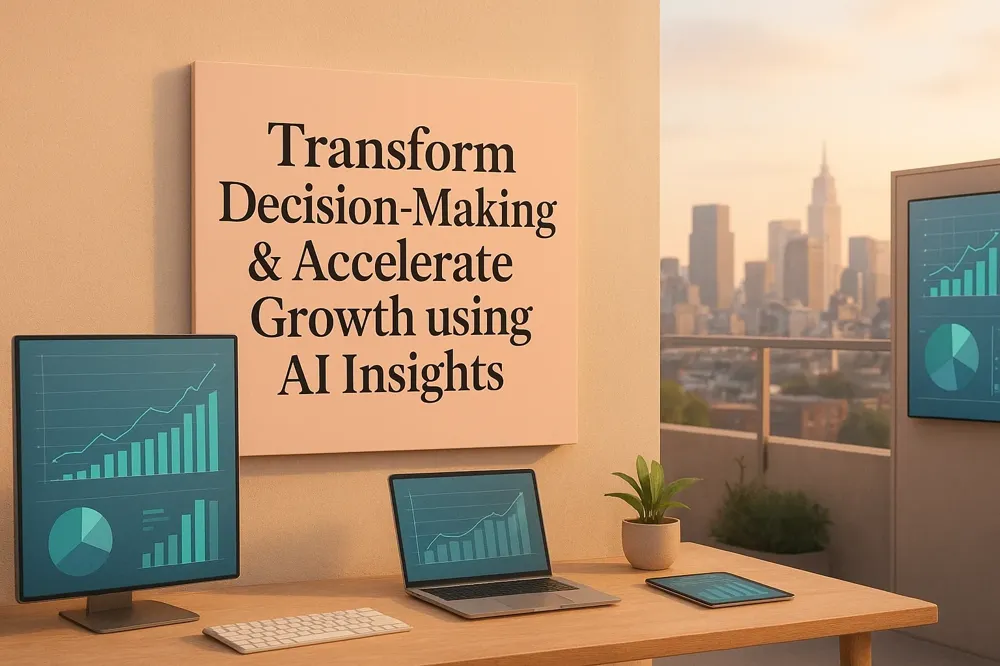
AI significantly impacts business growth by enhancing decision-making through advanced data analysis and predictive insights. By rapidly processing large datasets, AI identifies patterns and forecasts trends that human analysis might miss, enabling proactive and data-driven strategies.
AI-enabled data analysis and predictive insights
AI-powered tools automate the analysis of complex business data, uncovering actionable insights in real-time. Predictive analytics anticipate market fluctuations, customer demand, and operational risks, allowing businesses to optimize inventory, tailor marketing efforts, and mitigate potential issues before they occur.
Strategic decision support for growth and innovation
With AI's real-time insights, business leaders can refine strategies and innovate more effectively. AI enables scenario modeling, risk assessments, and resource optimization, supporting smarter investments and fostering agility in competitive markets. Increased efficiency from automation also frees up human capital to focus on creative and strategic initiatives, as outlined in Benefits of Artificial Intelligence for Business.
Examples of AI fostering business expansion
Leading companies like Walmart AI supply chain optimization with AI and Tesla's autonomous vehicle AI development have leveraged AI to optimize supply chain and inventory management and develop autonomous technologies, respectively, resulting in operational savings and enhanced market positioning. Additionally, AI-driven personalized experiences, as seen with Amazon and Netflix, boost customer loyalty and sales growth, illustrating AI’s vital role in expanding business reach and profitability.
Comprehensive Benefits of AI Integration in Business Operations
What are the benefits of using AI in business?
Artificial intelligence offers a transformative impact on business operations, delivering AI enhancing operational efficiency and substantive cost reductions. By AI automation benefits such as scheduling, inventory management, and content generation, AI frees human resources to concentrate on strategic and creative tasks. This leads to increased productivity and agility across various industries.
AI-driven customer engagement stands out as a major advantage. AI personalizing customer experiences, combined with AI-powered automation in business, significantly improve customer satisfaction and loyalty. These technologies provide AI-powered personalized marketing success, helping businesses deepen consumer relationships and boost conversions.
Automation through AI minimizes errors and accelerates operations. For example, Predictive analytics in business anticipate demand fluctuations, optimize logistics, and reduce costly downtimes, especially in manufacturing and retail supply chains. Small businesses also benefit as AI tools for small business efficiency help address challenges proactively by monitoring delivery routes and potential disruptions.
While AI integration offers vast operational benefits, Ethical governance in AI implementation is critical. Companies must consider Ethics and security in AI for small business, security risks, and legal frameworks to maintain trust and ensure compliance. Comprehensive governance and continuous oversight prevent unintended consequences, promoting sustainable growth.
In summary, AI enables businesses—from small enterprises to large corporations—to streamline workflows, enhance customer experiences, and improve decision-making, all while Reducing risks with AI to capitalize on AI's full potential.
Advantages of AI Automation Enhancing Business Efficiency and Productivity
What are the advantages of AI automation in business?
AI automation benefits significantly boosts business efficiency and productivity by automating repetitive and complex tasks that traditionally require human intervention. This automation reduces human errors, which improves accuracy and reliability in workflows across various departments. For instance, AI-powered chatbots enable businesses to operate around the clock, ensuring 24/7 availability for customer service and internal operations without fatigue or delay.
Another major advantage is cost savings and workforce optimization. By handling routine tasks such as data entry, scheduling, and invoice processing, AI reduces the need for manual labor, allowing organizations to reallocate human resources to strategic and creative initiatives. This not only lowers operational costs but also enhances employee satisfaction by removing mundane responsibilities.
AI systems also support risk management by providing data-driven, unbiased decision-making. Advanced analytics and predictive models can detect anomalies, forecast potential issues, and monitor compliance automatically. This helps businesses mitigate risk in areas such as fraud detection, quality control, and hazardous operational environments.
Despite these benefits, adopting AI automation presents challenges including initial implementation costs, integration complexities, and ethical concerns related to privacy, transparency, and job displacement. Organizations must invest in training, regulatory compliance, and governance frameworks to responsibly harness AI's potential.
In summary, AI automation enhances operational efficiency through:
- Reducing human error and enabling 24/7 operations with AI-driven tools like AI-powered chatbots.
- Achieving cost savings and workforce optimization by automating routine functions.
- Improving risk management and decision impartiality through predictive analytics and real-time monitoring.
- Addressing integration and ethical challenges to maximize sustainable benefits.
By thoughtfully incorporating AI automation, businesses—from small enterprises to large corporations—can drive growth, innovation, and competitive advantage in a technology-driven market landscape.
Real-World AI Use Cases Revolutionizing Diverse Industries
What are some examples of AI use cases across different industries?
AI is transforming a multitude of industries by enhancing efficiency, innovation, and customer satisfaction. Here’s how AI is reshaping key sectors:
Healthcare advancements in diagnostics and personalized treatment
AI-powered applications like IBM Watson Health and VideaHealth improve diagnostic accuracy by analyzing medical images such as X-rays and MRIs. AI also supports personalized treatment planning and accelerates drug discovery, enabling more effective, tailored patient care while reducing costs (AI applications in healthcare).
Finance applications in fraud detection and portfolio management
In finance, AI automates fraud detection with up to 90% accuracy, safeguarding assets and complying with regulations. AI-driven portfolio management optimizes investments through predictive analytics, helping financial institutions like KPMG and Deloitte make informed decisions rapidly (AI applications in financial services.
Retail enhancements via personalized recommendations and inventory optimization
Retailers like Amazon and Sephora harness AI for personalized customer recommendations, boosting engagement and loyalty. AI also optimizes supply chain management by forecasting demand fluctuations and improving inventory turnover by up to 50%, resulting in cost savings and better product availability (AI optimizing supply chain management).
Manufacturing improvements in predictive maintenance and supply chains
Manufacturers utilize AI-driven predictive maintenance to anticipate equipment failures, minimizing downtime and extending machinery lifespan. Companies such as Walmart and Shell use AI to optimize logistics and supply chains, reducing operational costs and enhancing delivery reliability (Walmart supply chain optimization with AI.
These examples illustrate how AI empowers industries to automate routine tasks, enhance decision-making with real-time data analysis, and drive growth by fostering innovation and operational excellence (AI automation benefits; AI-driven data analysis.
Risks and Challenges of AI Adoption in Business Contexts
What are the risks and disadvantages of AI in business?
Adopting AI in business brings numerous advantages, but it also presents significant risks and challenges.
Implementation costs and integration challenges
High initial costs make AI adoption difficult for smaller companies. Integrating AI into existing systems often requires redesigning workflows for AI and substantial IT resources. Without careful planning, these hurdles can delay or derail projects.
Data privacy and security concerns
AI systems handle vast amounts of sensitive data. This raises concerns about compliance with data privacy laws and protection against cyber threats. Businesses must implement robust security measures to safeguard information, leveraging insights from AI Customer Support Solutions and AI Security Enhancements.
Algorithmic bias and ethical considerations
AI can perpetuate or amplify biases present in training data, leading to unfair or discriminatory outcomes. Ethical issues also arise around transparency and accountability. Companies need to establish clear governance to detect and mitigate bias and manage AI responsibly, guided by frameworks on ethical governance in AI implementation.
Workforce impacts and risk management strategies
Automation risks displacing jobs, creating workforce resistance and skill gaps. Businesses should invest in training and change management to align human roles with AI capabilities, supported by strategies discussed in Future of Work and AI. Proactive risk management includes monitoring AI outputs and addressing operational or security risks using AI-driven risk management.
In summary, while AI can transform business operations, balancing innovation with responsible use and comprehensive risk mitigation is essential for sustainable success.
Current State and Adoption Trends of AI in Business
What is the current state and adoption trends of AI in business?
Artificial Intelligence (AI) adoption is rapidly accelerating across industries worldwide and prominently in the U.S., becoming a core component of modern business operations. Over 75% to 88% of organizations report using AI in at least one business function, with sectors including healthcare, finance, retail, manufacturing, and technology leading the way (State of AI Global Survey 2025).
Generative AI and large language models are reshaping workflows, prompting about 21% of companies, especially those with revenues over $500 million, to fundamentally redesign processes for better value realization (Generative AI Workflow Redesign. This surge in AI use is also accompanied by increased executive oversight, where CEOs and C-suite leaders actively govern AI deployment to ensure strategic alignment, risk management, and maximize bottom-line impact (AI Governance by CEOs.
Small and medium businesses (SMBs) are joining the AI movement thanks to advances in cloud computing, no-code tools, and affordable AI-powered platforms. Currently, nearly all small businesses in the U.S. integrate AI for automating routine tasks, improving customer engagement, and making data-driven decisions, enabling them to compete effectively in dynamic markets (How Small Businesses Benefit from Artificial Intelligence).
This growing AI landscape underscores a broad transformation where automation, predictive analytics, and AI-driven personalization enhance decision-making, operational efficiency, and innovation. Businesses that strategically adopt and govern AI are poised for improved scalability, cost savings, and competitive advantage in the digital economy (Benefits of Artificial Intelligence for Business).
Strategic Implementation and Future Outlook of AI Automation
Importance of phased deployment and continuous monitoring
Successfully integrating AI automation in business operations requires a cautious and methodical approach. Organizations are advised to start with small pilot projects to test AI applications, allowing for refinement and risk assessment before a widespread rollout. Continuous monitoring of AI performance ensures that implementations adapt to changing conditions and deliver expected outcomes efficiently.
Focus on ethical governance, risk mitigation, and upskilling workforce
Ethical governance is crucial in managing AI systems to prevent biases, ensure data privacy, and promote transparency. Companies are increasingly establishing centralized AI governance frameworks and dedicating teams to oversee AI deployment. Simultaneously, upskilling the workforce in AI literacy enhances human-AI collaboration, empowering employees to work alongside AI tools safely and effectively while mitigating risks related to inaccuracies and cybersecurity.
Emerging AI trends like explainable AI, IoT integration, and human-AI collaboration
Looking ahead, explainable AI is a priority to foster trust by making AI-driven decisions transparent and understandable. Integration of AI with the Internet of Things (IoT) facilitates real-time data-driven insights, boosting operational agility in sectors such as manufacturing and smart cities. Enhanced human-AI collaboration augments creativity and strategic planning by combining machine precision with human judgment.
Potential economic impact and productivity gains
The economic potential of AI automation is substantial, with estimates projecting up to $4.4 trillion in annual global productivity gains. Automation can reduce operational costs, improve decision-making speed, and drive innovation. Businesses adopting AI are already recording improved efficiency and revenue growth, marking AI as a transformative catalyst for sustainable business development and competitiveness in the digital economy.
Conclusion: Embracing AI Automation for Sustainable Business Growth
AI Automation: Driving Efficiency and Innovation
AI-driven automation revolutionizes modern business by streamlining repetitive tasks and unlocking valuable insights from large data sets. It significantly boosts operational efficiency, reduces costs, and fosters innovation by freeing human talent for strategic initiatives. From predictive maintenance to personalized customer engagement, AI enhances decision-making speed and accuracy across industries.
Responsible AI Adoption
Adopting AI requires a commitment to ethical practices and rigorous risk management. Businesses must address challenges such as data privacy, algorithmic bias, cybersecurity, and intellectual property rights. Incorporating explainable AI and governance frameworks builds transparency and trust, ensuring AI augments rather than replaces human judgment.
Competitive Advantage Through AI
Forward-thinking organizations that harness AI’s potential can outperform competitors by anticipating market shifts, optimizing workflows, and enhancing customer experience. Whether for small businesses or large enterprises, leveraging AI technologies is essential to remain agile and sustainable in an increasingly digital economy. Embracing AI automation today sets a foundation for durable growth and innovation tomorrow.
Table of contents
Introduction: Revolutionizing Growth through AI-Driven AutomationUnderstanding the Four Pillars of Effective AI AutomationHow AI and Automation Drive Exceptional Business ProductivityTransforming Decision-Making and Driving Business Growth with AIComprehensive Benefits of AI Integration in Business OperationsAdvantages of AI Automation Enhancing Business Efficiency and ProductivityReal-World AI Use Cases Revolutionizing Diverse IndustriesRisks and Challenges of AI Adoption in Business ContextsCurrent State and Adoption Trends of AI in BusinessStrategic Implementation and Future Outlook of AI AutomationConclusion: Embracing AI Automation for Sustainable Business Growth

Ready to improve
your rankings?
Use our free tools to get instant insights into your SEO performance and discover opportunities to rank higher