


Alex Vainer

December 9, 2025
The Role of AI in Business Automation Systems Integration
How Artificial Intelligence is Revolutionizing Business Automation System Integration
Introduction to AI in Business Automation and Systems Integration
Definition of AI in Business Automation
Artificial Intelligence in business automation refers to the use of AI technologies such as machine learning, natural language processing, and computer vision to optimize and streamline business functions. AI-powered automation handles repetitive, data-intensive, and complex tasks with minimal human intervention, enhancing decision-making, efficiency, and customer experience. It enables operational agility by automating processes like invoice processing, customer support, supply chain management, and HR onboarding with intelligent adaptability.
Overview of Systems Integration
Systems integration is the process of linking individual hardware, software, and communication protocols into a unified and harmonious environment. This approach streamlines workflows, improves data exchange, and enhances overall operational efficiency. Integrators employ technologies like APIs, middleware, and integration platforms-as-a-service (iPaaS) to ensure seamless communication between disparate systems such as ERP, CRM, and manufacturing controls, enabling businesses to automate workflows across departments and functions effectively.
Importance of AI Integration in Modern Business Processes
Integrating AI within business automation and systems enables real-time data processing, intelligent decision-making, and scalable workflows. AI integration improves process adaptability by allowing systems to learn from data patterns and make autonomous decisions, surpassing traditional rule-based automation. Organizations benefit through cost savings, higher accuracy, predictive maintenance, enhanced customer personalization, and improved resource allocation. AI-powered integration is vital for digital transformation, helping companies stay competitive in fast-evolving markets by connecting data, applications, and processes into a cohesive, intelligent ecosystem.
Here's Why You Need AI Powered Automations for Business ...
... business with the latest in AI automation technology ... You'll discover 'AI solutions for small business growth', learn ...
Fundamental Components and Technologies in AI Business Automation
What are the key AI technologies such as machine learning, NLP, computer vision, and RPA?
AI business process automation hinges on a blend of advanced technologies that enable intelligent process optimization. Machine learning algorithms drive predictive analytics and continuous improvement by learning from data patterns. Natural language processing (NLP) empowers systems to understand and interpret human language, crucial for virtual assistants and automated customer support. Computer vision enhances automation by enabling machines to visually inspect and detect defects or analyze images in industrial and commercial settings. Robotic process automation (RPA) automates repetitive, rule-based tasks, acting as the digital workforce performing tasks like data entry and invoice processing.
What roles do big data analytics, cloud computing, and IoT integration play in AI automation?
AI-powered big data analytics forms the backbone of AI automation by processing vast volumes of structured and unstructured data to extract insights that drive intelligent decision-making. Cloud computing in AI automation offers scalable, flexible infrastructure for hosting AI models, enabling real-time data processing and ubiquitous access to AI services across business systems. Integration of Internet of Things (IoT) integration with AI technology connects sensors and devices, facilitating real-time monitoring and control of assets, predictive maintenance, and dynamic response to operational changes.
How do these components optimize business processes?
Together, these AI components transform traditional automation by enabling dynamic adaptability and autonomous decision-making. Machine learning algorithms in business automation refines workflows by predicting bottlenecks and optimizing resource allocation. Natural language processing for automation streamlines communication-heavy processes such as customer service and HR onboarding through chatbots and intelligent document processing. Computer vision applications boost quality control and inspection efficiency in manufacturing by detecting defects faster than manual inspections. Robotic process automation (RPA) accelerates routine administrative tasks with high accuracy.
The synergy of big data analytics, cloud computing, and IoT integration enhances process visibility and responsiveness, empowering businesses to reduce human intervention, cut costs, and improve operational efficiency. These integrated AI technologies create intelligent automation ecosystems that continuously learn, adapt, and optimize business outcomes in real time.
Distinguishing AI-Powered Automation from Traditional Automation
Cognitive Capabilities of AI Including Real-Time Adaptability and Learning
AI-powered automation surpasses traditional rule-based systems by incorporating cognitive AI capabilities. Unlike static automation that follows predefined workflows, AI systems can adapt in real time to fluctuating conditions and make independent AI decision-making autonomous decisions. Machine learning algorithms enable continuous learning from new data inputs, improving accuracy and efficiency over time without manual reconfiguration.
Handling Unstructured Data Versus Rule-Based Automation
Traditional automation primarily processes structured, rule-based data—such as fixed forms or numeric inputs—limiting its scope to repetitive and predictable tasks. In contrast, AI automation leverages natural language processing (NLP), computer vision, and other AI techniques to interpret and analyze unstructured data like text, images, and audio. This capability allows AI to manage complex information sources that traditional automation cannot reliably handle.
Advantages of AI in Complex and Variable Task Automation
AI excels in automating complex, variable tasks with unpredictability and nuance, such as AI in customer service interactions, invoice processing, or quality inspection in manufacturing. AI-driven automation can recognize patterns and anomalies, interpret context, and dynamically adjust workflows. These features not only increase operational efficiency but also reduce human intervention for tasks that are beyond the capabilities of rigid, rule-based automation.
By integrating cognitive processing, unstructured data handling, and adaptive learning, AI-powered automation offers transformative improvements in automation performance, versatility, and decision-making accuracy compared to traditional automation approaches.
AI Agents and Tools Facilitating Autonomous Business Process Automation
Examples of AI agents like Boomi GPT, DesignGen, Pathfinder, Joule
AI agents have become pivotal in advancing autonomous AI business process automation. Platforms such as Boomi provide specialized AI agents including Boomi GPT, DesignGen, and Pathfinder, each tailored to streamline distinct automation facets. Boomi GPT excels in conversational AI, enabling natural language interactions to facilitate information retrieval and decision-making. DesignGen automates process design, creating efficient workflows with minimal human input. Pathfinder optimizes these workflows by analyzing performance data and suggesting enhancements. Microsoft’s Joule AI offers role-based AI assistants that orchestrate agents to accelerate complex workflows across business functions.
Capabilities of AI agents for autonomous task execution and workflow optimization
These AI agents empower organizations by autonomously executing multi-step workflows and complex tasks traditionally requiring human intervention. They leverage machine learning algorithms, natural language processing for automation, and decision intelligence applications to analyze large datasets, make informed decisions, and adapt processes dynamically. This autonomy reduces operational costs and cycle times while simultaneously enhancing accuracy and compliance. AI agents continuously learn from interactions and data streams, enabling iterative improvements in task execution and workflow efficiency.
Integration of AI agents into low-code platforms for scalability
Integration of AI agents into low-code platforms like Boomi AI-powered integration platform and Microsoft Power Platform amplifies scalability and accessibility. These platforms provide extensive connectors and user-friendly environments where AI capabilities can be embedded seamlessly into existing business systems, promoting rapid deployment and customization. Low-code integration reduces the need for specialized IT skills, democratizing AI automation across enterprises ranging from small businesses to large corporations. This fosters a scalable automation infrastructure enabling real-time processing, continuous improvement, and enterprise-wide AI adoption, crucial for competitive digital transformation in 2025 and beyond.
Systems Integration: Linking AI Technologies for Holistic Automation Solutions
Methods of AI Systems Integration Including Middleware and Communication Protocols
AI systems integration involves connecting diverse AI components like speech synthesizers and knowledge bases, and machine learning models across multiple computing environments. This is primarily achieved through message routing and communication protocols delivered via middleware systems in AI platforms. Middleware acts as the connective tissue, enabling software components interoperability among different software modules, often developed in varied programming languages, distributed across networks. These communication protocols ensure that data and commands flow seamlessly between AI subsystems, supporting coordinated and effective system behavior.
Challenges of Integrating Multimodal AI Components from Different Technologies
Integrating AI components such as speech recognition, natural language processing (NLP), and logical reasoning modules presents significant challenges. Different teams often develop these modules in isolation, resulting in 'isolated AI solution islands' that lack compatibility. This fragmented development hinders collaboration, complicates the fusion of AI technologies like computer vision and cognitive computing, and delays system-wide functionality. Additionally, ensuring robustness is critical, especially in high-stakes applications like healthcare (AI in oncology), where AI integration failures can lead to severe consequences. Rigorous testing and validation of integrated modules are thus essential to mitigate operational risks.
Importance of Standardized Protocols and Collaborative Development
Standardized communication protocols and collaborative development strategies are vital for building cohesive AI systems. They enable multiple AI components from various sources to interoperate reliably, facilitating scalability and flexibility. Embracing the open software movement in AI components and adhering to integration standards encourage reuse, accelerated development, and continuous improvement. Furthermore, methodologies such as the Constructionist Design Methodology (CDM) promote iterative design with well-defined typed streams and messages, fostering modularity and ease of maintenance. Collaborative workflows involving developers, domain experts, and system integrators ensure AI solutions align with complex business processes and technical requirements, delivering holistic enterprise automation solutions.
Benefits of AI-Enabled Automation Systems Integration for Operational Efficiency
How Does AI Improve Machine-to-Machine Communication and Workflow Automation?
AI-enabled automation systems integration benefits dramatically enhances machine-to-machine communication and workflow optimization. By connecting disparate industrial equipment, control systems like SCADA control systems, Programmable logic controllers (PLCs), and Internet of Things (IoT) integration, AI creates a seamless operational ecosystem. AI agents facilitate autonomous task execution and workflow optimization, enabling machines to automatically adjust processes based on real-time data. This leads to improved coordination, reduced manual intervention, and enhanced responsiveness in production lines and other operational environments.
What Role Does Real-Time Data Processing and Predictive Maintenance Play?
Real-time data processing is a core benefit of AI integration, allowing continuous monitoring and analysis of equipment status. AI-powered predictive maintenance uses machine learning algorithms in business automation to forecast potential failures by analyzing sensor data, reducing unplanned downtime and maintenance costs. This proactive approach not only preserves asset lifespan but also improves safety and operational reliability by addressing issues before they escalate.
How Does AI Enhance Supply Chain Management and Reduce Operational Costs?
AI’s capacity to analyze large datasets enables better forecasting, inventory optimization, and logistics management. Integration of AI into supply chains leads to smarter demand predictions, minimizing overstock and stockouts, thereby reducing waste and storage costs. Enhanced supply chain visibility also helps identify inefficiencies and bottlenecks, allowing companies to streamline operations and cut expenses. Collectively, these improvements foster cost savings and boost overall operational efficiency across business functions. See also AI in supply chain management.
Benefit AreaAI ContributionImpact on OperationsMachine Communication & WorkflowAutonomous task execution, enhanced coordinationReduced manual intervention, faster responseReal-Time Data & MaintenancePredictive analytics, continuous monitoringLower downtime, extended asset lifeSupply Chain ManagementDemand forecasting, inventory optimizationCost reduction, improved delivery times
Real-World Use Cases Demonstrating AI in Business Automation Integration
AI in Manufacturing: Predictive Maintenance and Quality Control
AI is revolutionizing manufacturing by improving operational efficiency and product quality. Predictive maintenance powered by machine learning in manufacturing analyzes sensor data to forecast equipment failures, minimizing unplanned downtime and reducing maintenance costs. Computer vision applications detect defects and inconsistencies in real-time during production, ensuring high-quality outputs and reducing waste. These AI-driven capabilities deliver continuous monitoring and adaptive responses that outperform traditional inspection methods.
AI in Finance and HR: Automated Invoice Processing and Onboarding
In finance, AI automates complex workflows such as AI applications in invoice processing, fraud detection with AI, and AI for financial forecasting. Intelligent document processing leverages natural language processing (NLP) to extract and validate data with minimal human intervention, accelerating accounts payable cycles and improving accuracy. In human resources, AI streamlines onboarding by automating candidate screening, training scheduling, and compliance checks. Companies like Rippling illustrate centralized workforce automation that reduces manual tasks and enhances operational efficiency.
Customer Service Automation Using Conversational AI and Chatbots
Conversational AI and chatbots are transforming customer support by handling inquiries, ticket routing, and personalized interactions 24/7. These NiCE AI Customer Service Automation interpret unstructured language input, automatically assess customer sentiment, and provide relevant solutions, improving response time and customer satisfaction. Platforms like NiCE unify digital and voice channels to deliver seamless experiences while reducing operational costs. This automation enables agents to focus on complex cases, optimizing workforce utilization.
These examples underscore how AI integration in business in business automation spans industries, augmenting decision-making, increasing scalability, and enabling agility. Enterprises deploying AI-powered automation solutions experience enhanced productivity, reduced errors, and faster response to market demands, driving competitive advantage in a digital economy.
Role of System Integrators in AI-Powered Business Automation
What Functions Do System Integrators Perform in Connecting Hardware, Software, and Business Processes?
System integrators play a critical role in AI business process automation by combining disparate hardware, software, and communication protocols into cohesive, efficient automation systems. They analyze existing business processes to identify optimization opportunities and devise system architectures that seamlessly connect industrial machinery, enterprise applications, and Internet of Things (IoT) integration devices. This integration spans components such as SCADA control systems, programmable logic controllers (PLCs), robotic process automation (RPA), AI agents, and cloud platforms, enabling real-time data exchange and automated workflows. Integrators are responsible for managing vendor coordination, system design, software interfaces, and project timelines to ensure smooth end-to-end automation (System integrators).
Why Is Industry-Specific Customization and Security Vital in System Integration?
Each industry has unique operational requirements, compliance standards, and security needs that necessitate tailor-made automation solutions. System integrators customize designs to fit specific sector demands, whether manufacturing precision controls, supply chain synchronization, or customer service workflows. Security is paramount, as integrated AI and automation systems increase the attack surface and require robust safeguards. Integrators incorporate cybersecurity best practices, including authentication, data integrity, network segmentation, and ongoing monitoring, to protect sensitive operational technology (OT) and business data from cyber threats (AI and machine learning in industrial automation).
Can You Provide Examples of Integrator Roles in Large Automation Projects?
Large-scale projects showcase the expertise of system integrators in deploying complex AI-powered automation solutions. For instance, companies have upgraded extensive pipeline networks involving over 87,000 hardwired connections and remote instrumentation, ensuring reliable monitoring and control across vast infrastructures. Integrators have also led digital innovations for carbon-neutral transport systems and automation in manufacturing plants, supporting scalable AI-driven workflows and operational excellence. Their project management covers everything from initial system design and configuration to deployment, staff training, and long-term maintenance, guaranteeing efficiency gains and secure operations throughout the automation lifecycle (Automation and Systems Integration).
Challenges and Security Considerations in AI Integration and Automation
What challenges arise from data quality, integration complexities, and algorithmic bias?
AI integration and automation face notable challenges starting with data quality issues. Poor or inconsistent data can significantly impair AI model training, leading to inaccurate predictions and suboptimal decision-making. Integration complexities also emerge when embedding AI into existing legacy systems that often have incompatible architectures, resulting in increased deployment costs and delayed implementation.
Algorithmic bias is another substantial concern. AI systems trained on biased data may perpetuate or amplify unfair outcomes, affecting customer experience and compliance with ethical standards. This bias risk necessitates rigorous validation and ongoing adjustment of AI algorithms.
What are the main security risks involved with AI automation?
AI automation introduces specific security vulnerabilities. Data poisoning attacks manipulate training data to compromise AI models' integrity, while adversarial attacks aim to deceive models by subtly altering inputs. Legacy system vulnerabilities extend risks as outdated infrastructure may lack robust protections against cyber threats, increasing susceptibility to breaches.
Moreover, the expanded attack surface due to AI's reliance on vast sensor and user data heightens potential exposure to malicious activities. Supply chain risks and overreliance on automated decisions without human oversight add further security challenges.
Which best practices help mitigate these challenges?
To address security and reliability concerns, adopting secure design principles is essential. This includes robust authentication, strict access control, and data integrity assurance. Continuous monitoring helps detect and respond to anomalies in real time.
Human oversight remains critical, employing a human-in-the-loop approach to validate AI decisions and maintain accountability. Incorporating compliance with international standards such as GDPR, HIPAA, and SOC 2 ensures adherence to privacy and security protocols.
Furthermore, a secure development lifecycle with network segmentation, regular backups, and supply chain vetting strengthens resilience. Collaboration among automation engineers, AI specialists, and cybersecurity professionals fosters the development of secure and reliable AI-powered automation systems.
Emerging Trends and Future Directions in AI Business Automation Systems Integration
Rise of Agentic AI and Autonomous Workflows
Agentic AI is transforming AI business process automation by enabling AI agents to perform complex, multi-step tasks independently. Unlike traditional automation that operates on predefined rules, agentic AI systems learn from experience and make decisions in real time, driving Agentic AI and autonomous workflows across various domains such as customer churn monitoring, internal reporting, and operational reviews. This shift moves organizations toward higher degrees of automation—up to 80%—facilitating scalable virtual workforces that enhance productivity and operational agility.
Integration of Generative AI and No-Code/Low-Code Platforms
Generative AI models, exemplified by advanced language models, are becoming integral to AI automation offering capabilities such as content generation, dynamic process design, and conversational user interfaces. Their integration with no-code/low-code AI platforms empowers businesses at all scales—from startups to large enterprises—to rapidly build, customize, and deploy AI-driven workflows without heavy reliance on technical expertise. This democratization accelerates AI adoption by enabling process owners to tailor automation solutions precisely to their needs, enhancing time-to-market and reducing implementation costs.
Human-AI Collaboration and AI Copilots for Enhanced Decision-Making
The future of AI business automation emphasizes symbiotic human-AI collaboration, where AI copilots augment human intelligence with data-driven insights, real-time analytics, and process orchestration. These copilots operate across roles and functions—helping with scenario planning, workflow acceleration, and actionable predictions—thus enabling more informed and faster decision-making. Emerging trends point to the rise of domain-specific AI copilots that seamlessly integrate with enterprise systems, fostering transparency, compliance, and continuous learning.
Collectively, these trends signal a strategic evolution in AI business process automation: from rigid rule-based automation toward flexible, intelligent, and adaptive frameworks that align technology with human expertise to deliver superior business outcomes.
Strategic Importance of AI Integration in Business Automation for Competitive Advantage
AI as a critical element of digital transformation strategies
AI has swiftly become indispensable in corporate strategies worldwide, with nearly 90% of business leaders recognizing it as fundamental to their success within a few years. This technology underpins digital transformation efforts by automating repetitive tasks, optimizing workflows, and enabling data-driven decisions. Integrating AI in Business Process Automation helps companies remain agile and competitive in rapidly evolving markets.
Driving innovation, efficiency, and enhanced customer experiences
By embedding AI technologies—such as machine learning in business, natural language processing for automation, and computer vision applications—businesses achieve increased operational efficiency and innovation. AI enables faster processing, predictive analytics, and autonomous decision-making that reduce costs and resource usage. Additionally, AI personalization capabilities enhance customer engagement through targeted recommendations and 24/7 virtual assistance, improving satisfaction and loyalty.
Alignment of AI initiatives with business goals and ethical considerations
Strategic AI integration requires aligning automation initiatives closely with organizational goals to maximize value and limit risks. This involves comprehensive planning, including workforce preparation and data governance frameworks to ensure compliance and transparency. Ethical frameworks ensure AI applications uphold privacy, fairness, and security, fostering trust among stakeholders and maintaining sustainable competitive advantage.
By strategically leveraging AI, companies can transform traditional processes into intelligent, adaptive systems that yield improved productivity, innovation, and superior customer experiences while adhering to responsible AI practices.
Practical Steps for Successful AI Integration in Business Automation Systems
Assessment of suitable processes for AI automation
Successful AI business process automation begins with identifying which business processes are best suited for automation. Target high-volume, repetitive tasks or those requiring data-driven decisions, such as invoice processing automation, customer support workflow automation, supply chain management, and HR onboarding with automation. Prioritize processes that will benefit from AI's ability to handle unstructured data and complex decision-making, ensuring a clear business case and measurable outcomes.
Importance of workforce training and change management
Integrating AI technologies requires preparing employees through comprehensive training and guiding the organizational culture through change management initiatives. Engagement and education ensure staff understand AI's role as an augmentation tool, reducing resistance and fostering collaboration between humans and AI. Continuous support and leadership involvement are essential to embed AI fluency and encourage acceptance of new workflows.
Pilot projects, continuous monitoring, and optimization for sustained success
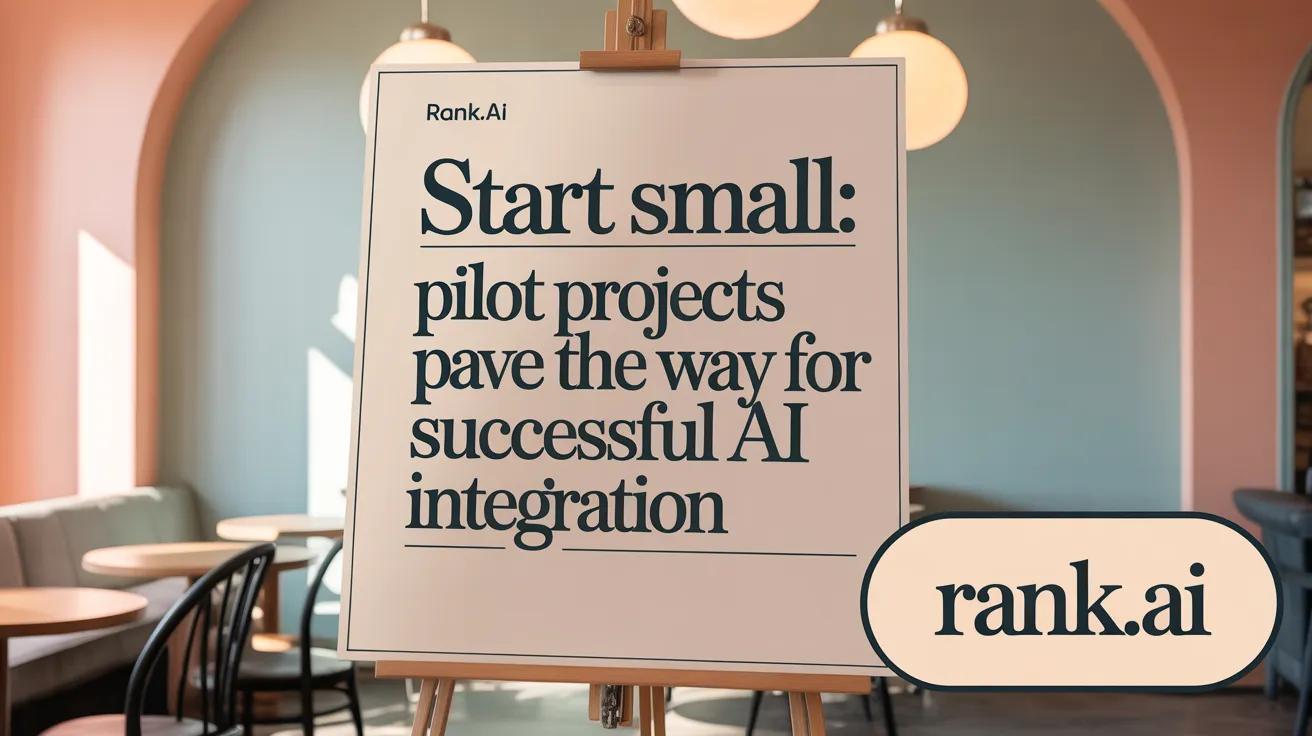
Start with small-scale pilot projects to validate AI solutions and measure impact before full-scale deployment. Use real-time monitoring and feedback mechanisms to assess performance, address issues, and adapt AI models to evolving business needs. Iterative optimization allows organizations to enhance accuracy, scalability, and ROI of AI automation, enabling continuous improvements and long-term success in digital transformation efforts.
Conclusion: Harnessing AI for Seamless Business Automation Systems Integration
AI is revolutionizing business automation integration by enabling smarter, faster, and more adaptive workflows. Unlike traditional systems, AI-driven integrations empower enterprises to automate complex tasks, process diverse data types, and make intelligent decisions in real-time.
The future of business ecosystems is poised for deeper AI integration that synchronizes operations end-to-end—from supply chain to customer engagement—enhancing agility and operational excellence.
Organizations should strategically adopt AI integration by prioritizing clear business goals, investing in scalable data infrastructures, and fostering human-AI collaboration. This approach unlocks significant productivity gains, cost savings, enhanced decision-making, and improved customer experiences.
Embracing AI-powered systems integration today is critical for gaining competitive advantage and building resilient, intelligent enterprises ready for the evolving digital landscape.
Table of contents
Introduction to AI in Business Automation and Systems IntegrationFundamental Components and Technologies in AI Business AutomationDistinguishing AI-Powered Automation from Traditional AutomationAI Agents and Tools Facilitating Autonomous Business Process AutomationSystems Integration: Linking AI Technologies for Holistic Automation SolutionsBenefits of AI-Enabled Automation Systems Integration for Operational EfficiencyReal-World Use Cases Demonstrating AI in Business Automation IntegrationRole of System Integrators in AI-Powered Business AutomationChallenges and Security Considerations in AI Integration and AutomationEmerging Trends and Future Directions in AI Business Automation Systems IntegrationStrategic Importance of AI Integration in Business Automation for Competitive AdvantagePractical Steps for Successful AI Integration in Business Automation SystemsConclusion: Harnessing AI for Seamless Business Automation Systems Integration

Ready to improve
your rankings?
Use our free tools to get instant insights into your SEO performance and discover opportunities to rank higher